Novelgen
Find Us
PATA-X · Livestock

Livestock

🐄

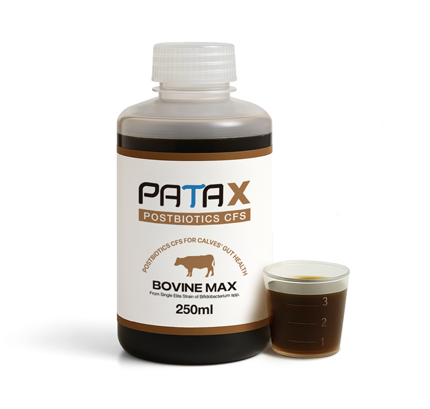
PATA-X BovineMAX

PATA-X BovineMAX Image
PATA-X BovineMAX
✓Reduces mortality rate caused by nutritional imbalance and weakening due to calf diarrhea
✓Improves gut health by balancing intestinal microbiota
✓Demonstrated viral inhibition effect against Bovine Coronavirus (BCV)

PATA-X BovineMAX can be used as an effective and safe complementary measure to support bovine growth, digestive health improvement, and immune reinforcement.

How dangerous are bovine calf infectious diseases?

Bovine infectious diseases can lead to mortality, transmission, and the spread of zoonotic diseases, making them a critically managed area in farming and the livestock industry.

Mortality in cattle is highest during the calf stage, with infectious diseases (gastrointestinal infections and respiratory diseases) and failure of early immune management as primary causes — making early intervention and preventive strategies essential.

Diarrhea, the hallmark symptom of calf infectious diseases, is primarily caused by viral and bacterial (e.g., E. coli) infections. With increasing antibiotic resistance in E. coli infections, treatment is becoming more difficult, and alternative strategies are needed.

Infectious Diseases Causing Bovine Diarrhea

Type
Pathogen / Disease
Onset Period
Characteristics
Virus
Rotavirus
5 to 14 days after birth
Group infection possible. 20–60% of calf diarrhea causes, mortality rate 5–20%
Coronavirus
5 to 21 days after birth
Can manifest enteritis and respiratory symptoms simultaneously, infection rate 70%
Buvavirus
1 week to 2 months after birth
Multiple infections with rota/coronavirus are common. Infection rate 10–30%
Bacteria
E. coli (F5/K99)
1 to 4 days after birth
Accompanied by high fever, progresses rapidly. Diarrhea incidence 20%
Clostridium
Around 1 week after birth
Causes acute enteritis and abdominal pain
Salmonella
All ages
Bloody diarrhea, fever, possible systemic infection. Serious antibiotic-resistant strain issues; a zoonotic disease
Parasite
Cryptosporidium
5–28 days of age
Causes chronic diarrhea and impaired nutrient absorption. Infection via contaminated water and environment; no effective antibiotic treatment
🐖

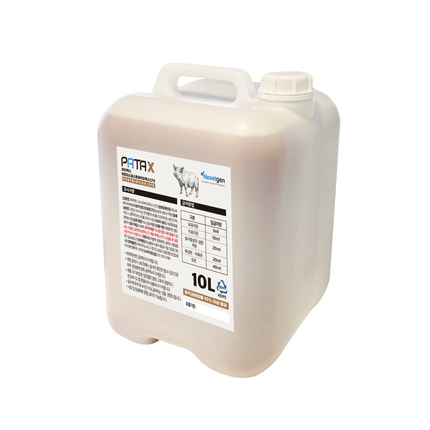
PATA-X PigMAX

PATA-X PigMAX Image
PATA-X PigMAX
✓Helps prevent infectious diseases through improvement of gut environment and immune reinforcement in pigs.
✓Supports digestive health through anti-inflammatory action and suppression of harmful intestinal bacteria.
✓Antiviral efficacy against PEDV (Porcine Epidemic Diarrhea Virus) has been confirmed.

PATA-X PigMAX can be utilized as an effective complementary measure to enhance pig immunity, improve gut health, and deliver antiviral effects to boost swine production performance.

Porcine infectious diseases threaten the swine industry.

Porcine infectious diseases cause enormous economic losses to farms due to high mortality rates and rapid spread, and some are zoonotic diseases that also impact public health.

For viral infectious diseases with no available treatments — such as African Swine Fever (ASF) and Porcine Epidemic Diarrhea (PED) — prevention and immune management are paramount, and PATA-X postbiotics-based solution can serve as an important alternative.

Major Porcine Infectious Diseases & Mortality Rates

Disease
Cause of Infection
Mortality (%)
Key Features & Impact
Porcine Epidemic Diarrhea (PED)
PED Virus (Coronaviridae)
80–100% (neonatal piglets)
Vomiting, watery diarrhea, dehydration. Fatal for neonatal piglets; low mortality in adults
Porcine Reproductive & Respiratory Syndrome (PRRS)
PRRSV (Arteriviridae)
Up to 100% (suckling piglets)
Reproductive failure, respiratory disease. One of the most economically damaging diseases in the global swine industry
African Swine Fever (ASF)
ASF Virus (Asfarviridae)
95–100% (acute form)
High fever, hemorrhagic lesions. No treatment or vaccine. Classified as a national disaster-level notifiable disease
Classical Swine Fever (CSF)
CSF Virus (Flaviviridae)
Up to 100%
High fever, hemorrhage, neurological symptoms. Highly contagious and a notifiable disease
Transmissible Gastroenteritis (TGE)
TGE Virus (Coronaviridae)
Up to 100% (under 2 weeks)
Vomiting, diarrhea, dehydration. Adults can recover; fatal for neonatal piglets
Pleuropneumonia
Actinobacillus pleuropneumoniae
20–80%
Acute respiratory distress, high fever, pulmonary hemorrhage. Rapid progression with risk of mass mortality
Swine Influenza (SI)
Influenza A Virus
10–15% (non-immune state)
High fever, coughing, respiratory distress. Zoonotic disease transmissible to humans